Through their longstanding partnership, FASET and IPAF are encouraging businesses to turn experiences on site into lessons others can use. Brian Parker explains why sharing what happened matters, and how that knowledge can reach the people who need it.
A machine overturns. An operator becomes trapped. A routine delivery ends with a serious injury. Inside the business involved, there may be an investigation, difficult conversations and changes to the way work is done. Elsewhere, another team could be preparing to carry out the same task, unaware of what happened.
For Brian Parker, Head of Safety and Technical at the International Powered Access Federation (IPAF), that gap represents an opportunity to prevent harm.
“Has an incident occurred which somebody can learn from and then prevent it happening in the future?” he asks.
It is a question he regularly puts to members of FASET, the trade association for the safety netting and temporary safety systems industry. It also gets to the heart of the relationship between the two organisations: bringing practical experience and wider safety intelligence together, then putting that knowledge to work.
Learning beyond your own site
FASET members use powered access equipment to carry out work at height. Their experience gives them a practical understanding of the conditions, pressures and challenges involved.
IPAF brings a wider view, drawing on incident reports and learning from powered access operations around the world.
Brian’s involvement with FASET predates his move to IPAF in 2020. Today, that relationship includes contributions to health, safety and technical discussions, updates on incident trends and guidance, and support for the Association’s events.
The exchange works in both directions.
“FASET members bring that practical experience of what works at height and what doesn’t,” he says. “We can contribute knowledge, experience and some of the learning we’re getting from around the world.”
An incident overseas may involve different working conditions, equipment or infrastructure. But the underlying issues can still feel familiar: planning, supervision, ground conditions, awareness of surrounding hazards or arrangements for recovering someone when something goes wrong. The value lies in recognising those connections before they become relevant to your own business.
What happens after a report?
Brian recognises that reporting takes time, particularly for smaller businesses managing busy workloads. Some people may also question what difference one contribution will make.
His answer is to show what comes back.
Information shared with IPAF helps build its understanding of incidents and informs guidance, safety campaigns and practical resources. Brian explains that reports are treated confidentially and identifying details removed when learning is shared.
“We’re never apportioning blame on the report,” he says.
That approach matters. People need to understand both why their experience is useful and how it will be handled.
IPAF’s Share Your Story initiative gives those experiences another route to reach the industry. It invites contributions ranging from incidents and near misses to practical improvements and moments when training made a difference.
Some are developed into animated reconstructions, allowing viewers to follow the sequence of events and consider how the outcome could have been different.
One example Brian mentions involves an operator injured while moving a scissor lift using pedestrian controls. Distracted by activity nearby, he failed to maintain a safe distance from the machine.
The reconstruction makes the circumstances visible: the movement of equipment, competing demands on someone’s attention and the decisions made during a seemingly straightforward task.
For another team, watching that sequence could prompt a useful conversation before its next delivery.
Giving managers something they can use
For facilities managers and those overseeing contractors, the partnership has practical relevance. Powered access safety depends on decisions made before an operator starts work, as well as what happens once the machine is in use. Those commissioning, planning and supervising a task need a shared understanding of the work and its risks.
That makes accessible safety communication valuable.
IPAF’s resources include short toolbox talks, Andy Access posters and guidance in multiple languages. They give managers and supervisors material to support briefings and discussions with their teams.
A short video can introduce a discussion about a familiar task. A poster can reinforce a message at the point where equipment is used. A toolbox talk can help a supervisor ask whether the team has considered the same circumstances on its own site.
These resources support the wider work of planning, training and supervision. Their usefulness comes from connecting the message to the people, equipment and conditions involved.
A partnership that keeps the conversation going
The relationship between FASET and IPAF provides a route for that learning to reach businesses regularly.
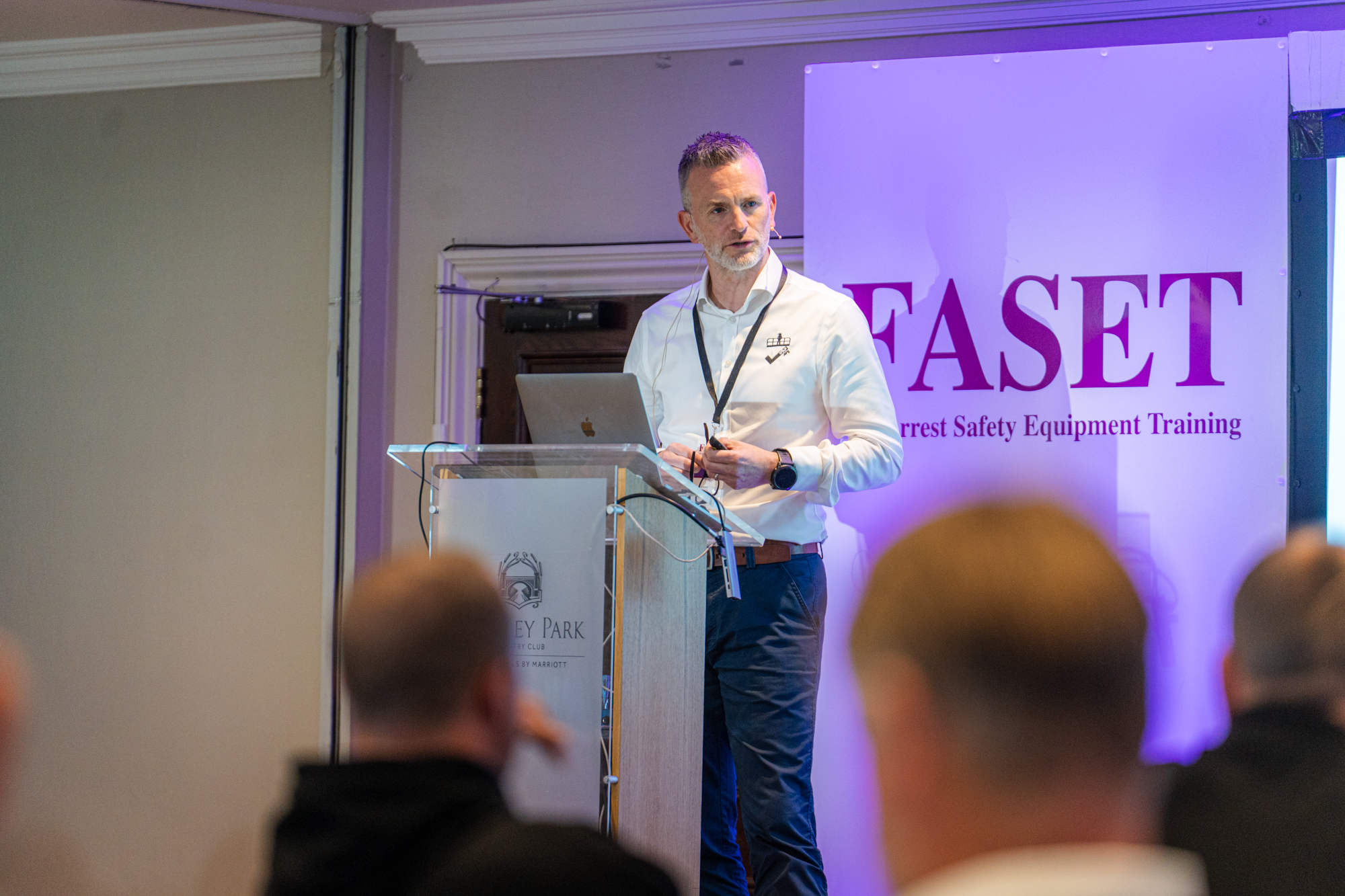
Brian’s contributions to meetings help members hear about emerging issues and developments in guidance. Members, in turn, can bring forward the practical questions and experiences that deserve wider attention.
For Brian, the purpose remains straightforward. “It’s about how we can come together and try to improve things,” he says. But that depends on businesses being willing to contribute as well as receive information.
A near miss may have caused no injury. A difficult task may have ended safely because someone spotted a problem or remembered their training. Both can contain knowledge worth passing on.
The next team facing those circumstances may never know who shared the lesson. They could still benefit from it.
Have an experience others could learn from? Explore IPAF’s Share Your Story initiative and its free safety resources and help turn lessons from your site into safer decisions elsewhere.
To register an accident or near miss on IPAF’s Accident Reporting Portal go to Dashboard | IPAF: Accident Portal